
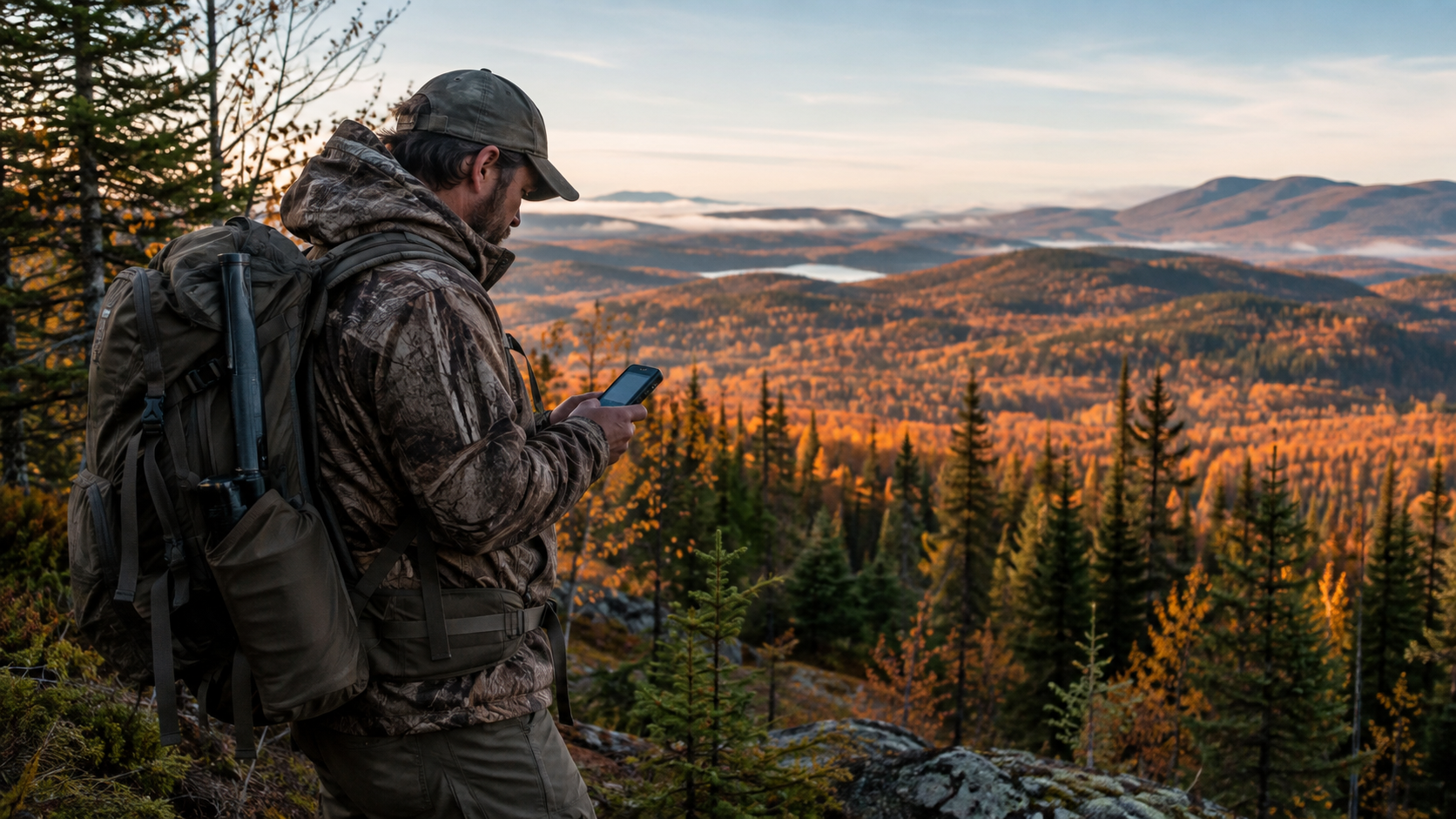
September means one thing for many Canadian hunters: hunting season is getting close, or already underway.
Whether you’re scouting for moose, deer, bear, or small game, preparation before heading into the woods can make a big difference. Once you’re far from cell service, knowing where you are, where you’ve been, and how to get back becomes especially important.
Before your next hunting trip, take a few minutes to make sure your GPS and navigation setup are ready for the season.
1. Update Your GPS Maps Before Leaving
Your GPS is only as useful as the information loaded onto it.
Before hunting season, check that your maps are up to date. Roads, trails, access routes, and other geographic information can change over time, particularly in forestry and remote areas.
Updating your maps before the trip also gives you time to make sure everything is installed and working correctly instead of discovering a problem at the trailhead.
2. Scout Your Hunting Area in Advance
Good navigation starts before you enter the woods.
Review the area you plan to hunt and identify important features such as:
- Access roads and trails
- Lakes, rivers, and wetlands
- Elevation and terrain
- Potential parking or staging areas
- Alternate routes in and out
Topographic maps can be especially useful for understanding terrain and identifying ridges, valleys, waterways, and other features that may influence animal movement.
3. Mark Important Waypoints
Waypoints can save a lot of time once you’re in the field.
Consider marking locations such as your vehicle, camp, trail intersections, hunting stands, scouting locations, or other points you may need to find again.
And don’t wait until you need them. Marking important locations as soon as you arrive makes it much easier to navigate back later, especially after dark or in poor weather.
4. Track Your Route
If your GPS supports track recording, turn it on when you head into unfamiliar terrain.
A recorded track creates a digital trail showing where you’ve travelled. If visibility changes, daylight disappears, or you simply lose your sense of direction, that track can help you retrace your route.
It’s a simple feature that can become extremely valuable in the backcountry.
5. Don’t Depend on Cell Service
Remote hunting areas often have limited or nonexistent cellular coverage.
That’s why a dedicated GPS with maps stored directly on the device remains useful in the backcountry. Your navigation doesn’t depend on having a mobile signal.
If you also use your phone for navigation, make sure any maps you need are available offline before leaving.
6. Bring Backup Power
Cold weather, long days, and constant GPS use can drain batteries faster than expected.
Bring spare batteries or a portable power source appropriate for your device. If you’re heading out for several days, plan for more power than you think you’ll need.
It’s also a good habit to begin every outing with fully charged equipment.
7. Always Have a Backup Navigation Plan
Technology is extremely useful, but it shouldn’t be your only option.
Consider carrying a compass and having a basic understanding of the surrounding terrain. Let someone know where you’re going and when you expect to return.
For remote trips, additional emergency communication equipment may also be worth considering.
Make Sure Your Maps Are Ready for Hunting Season
A little preparation at home can prevent a lot of frustration in the field.
Before your first fall hunting trip, update your maps, review your hunting area, mark important locations, and make sure your equipment is ready for several hours or days away from cellular coverage.
TrakMaps offers detailed GPS maps designed for navigating Canada’s roads, trails, waterways, and backcountry.
Explore TrakMaps GPS maps and get your GPS ready for hunting season.

