
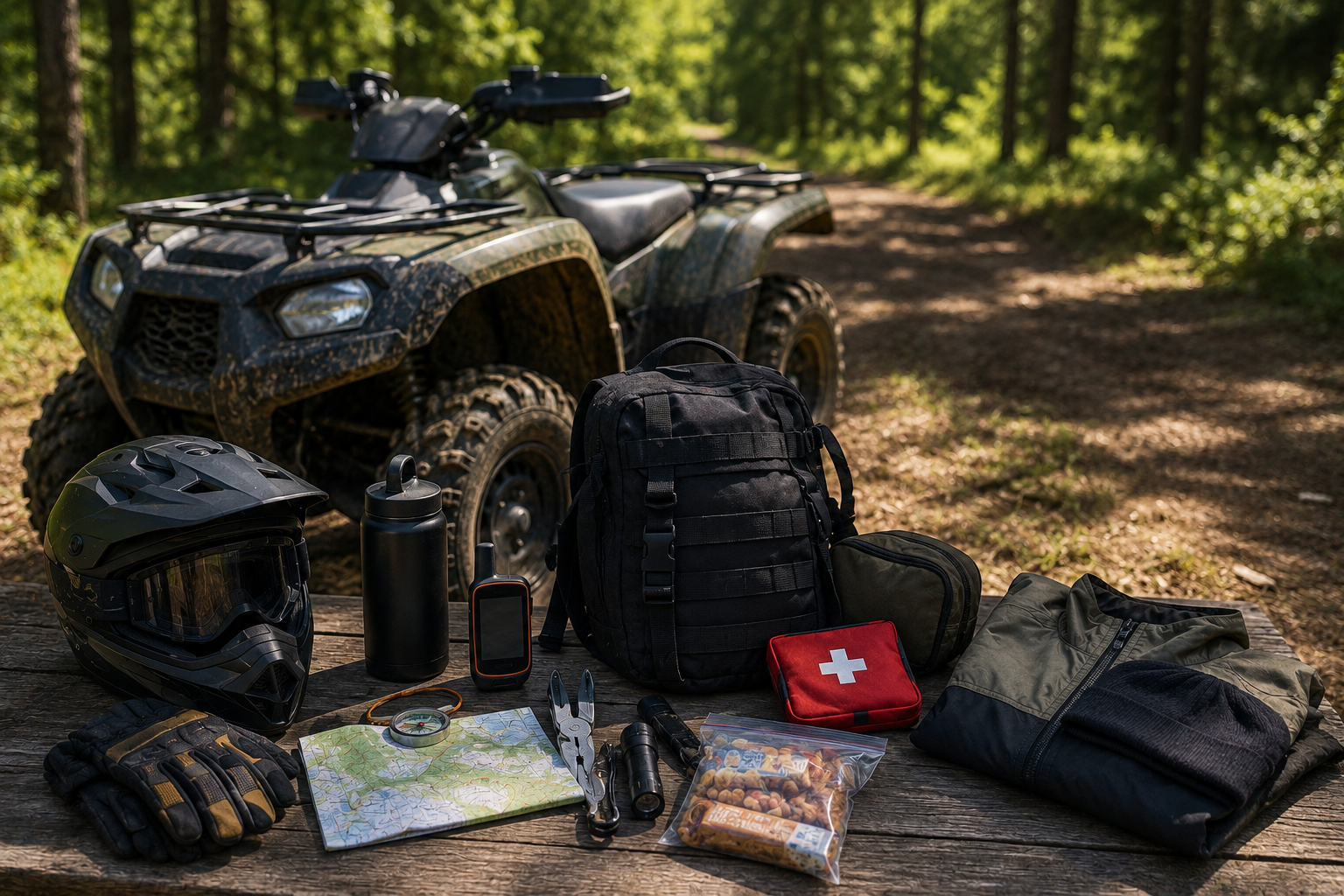
There’s nothing worse than being halfway through a great ride and realizing you forgot something important.
Whether you’re exploring familiar trails or heading deep into new territory, a little preparation goes a long way. Weather changes fast, trails can get rough, and cell service isn’t always reliable once you get out into the woods.
Here are a few things we always recommend bringing along before heading out for a full day on the ATV trails.
1. A GPS With Updated Maps
This one’s obvious, but it’s probably the most important.
A dedicated GPS with updated trail maps helps you stay on route, avoid getting turned around, and discover new areas with confidence. Cell service can disappear quickly in remote regions, which is why offline GPS maps are still the best option for many riders.
Before leaving, make sure your maps are updated and your GPS is fully charged or connected to power on your machine.
2. Water and Snacks
Even if you’re only planning a few hours out, always bring more water than you think you’ll need.
Trail riding can be surprisingly tiring, especially on warmer spring and summer days. Granola bars, jerky, trail mix, sandwiches, or fruit are easy to pack and make a huge difference once you stop for a break.
3. Basic Tool Kit
You don’t need to bring a full garage with you, but having a few basic tools can save a ride.
A good kit usually includes:
- pliers
- screwdrivers
- adjustable wrench
- tire repair kit
- zip ties
- duct tape
- flashlight
A small air compressor can also come in handy if you ride far from main roads.
4. Extra Layers
Spring weather can be unpredictable, especially in the mountains or near water.
Even if it feels warm when you leave home, temperatures can drop fast later in the day. A lightweight rain jacket or extra sweater is worth packing just in case.
Dry gloves are another thing riders never regret bringing.
5. First Aid Kit
Hopefully you never need it, but you’ll be glad it’s there if you do.
A compact first aid kit doesn’t take much space and can help with cuts, scrapes, bug bites, or minor injuries while out on the trails.
6. Emergency Communication
If you’re riding in remote areas, it’s smart to have some kind of backup communication plan.
That could be:
- a satellite communicator
- two-way radios
- downloaded offline maps
- letting someone know your planned route before leaving
A simple precaution can make a big difference if something unexpected happens.
7. Fuel Planning
Long trail days can burn more fuel than expected, especially in rough terrain.
Know where fuel stops are located ahead of time and don’t push your range too far. Some riders also carry small approved fuel containers for longer rides.
8. Respect the Trails
Spring riding season is one of the best times to get outdoors, but it’s also important to ride responsibly.
Stay on marked trails, respect trail closures, slow down near others, and avoid damaging muddy sections whenever possible. Helping protect the trails helps keep them open for everyone.
Ready for Riding Season?
At TrakMaps, we create ATV GPS maps for multiple Canadian provinces and U.S. states so you can explore with confidence, even where cell service disappears.
If you have questions about compatibility, coverage, or choosing the right map for your GPS, feel free to reach out to our team anytime.

